

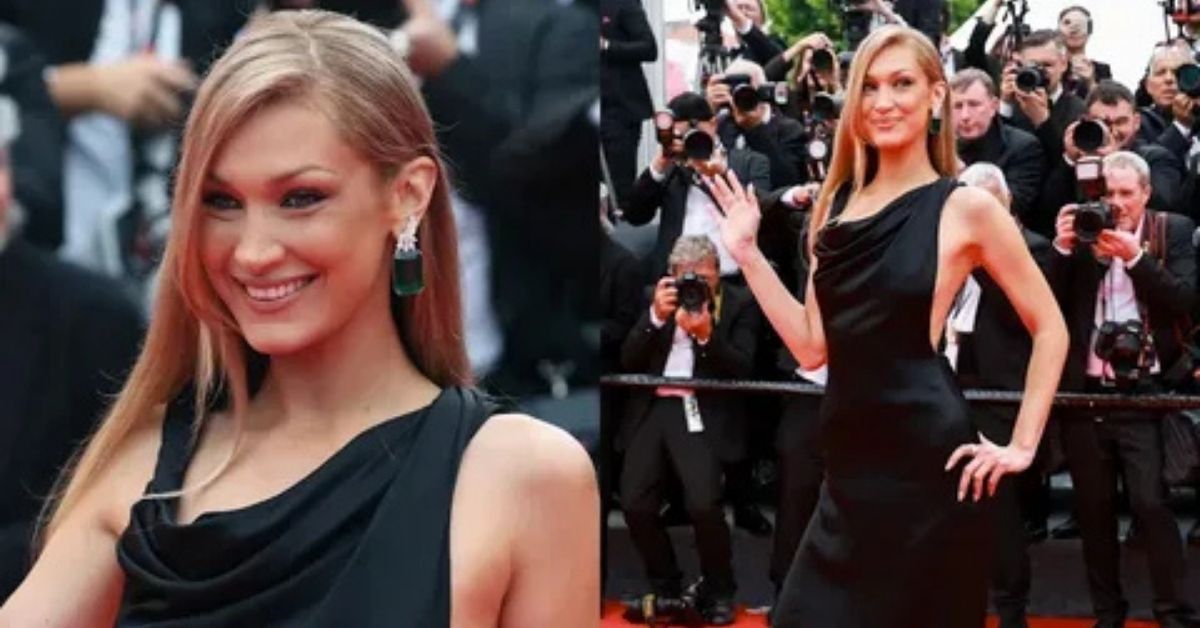
Jacob Schwartz colored Bella Hadid’s hair blonde for the 2025 Cannes Film Festival opening-night red carpet, where she appeared with Chopard. In a first-person account published by Into The Gloss, Schwartz describes a staged transformation: roughly 14 hours of lightening to remove the dark, done in Texas, with the color finished in Cannes.
The result was a dark blonde he built from a moodboard, a strand test, a layered lightening and lowlighting formula, and a finishing pass of hand-painted strands. What follows is his breakdown, from the references that shaped the shade to the demi-permanent toning approach and the shampoo and conditioner he calls the foundation — all of it useful as language to bring to a professional colorist.
How Bella Hadid Went Blonde for Cannes 2025
Schwartz was not new to Hadid’s hair. He writes that they met through friends when she needed a colorist for a Saint Laurent campaign, and that he then saw her every six to eight weeks for color touch-ups.
The Cannes appearance changed the brief. According to Schwartz, when the chance came for Hadid to walk the opening-night red carpet with Chopard, she wanted to make it a full moment and decided to go blonde.
The process that followed was split across two countries, reflecting how much time a dark-to-blonde change can demand. Schwartz says removing the dark took around 14 hours in Texas, and the color was finished once they were in Cannes. For the carpet, he styled a simple side part.
The Moodboard That Shaped the Shade
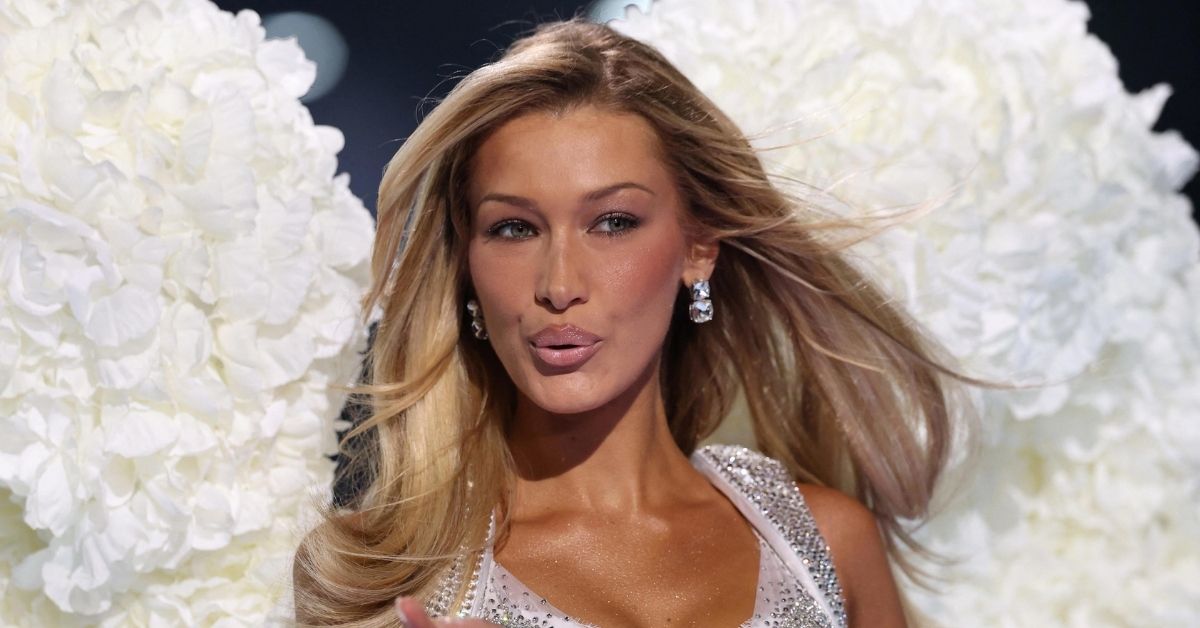
Schwartz built the target color from real references rather than a swatch alone. He names darker blonde Brigitte Bardot, Gisele Bündchen in the ’90s and early 2000s, and Hadid’s own baby photos.
The baby photos served a technical purpose. Schwartz says Hadid is a natural dark blonde, and he argues that years of highlights and dye can obscure a person’s original shade. His reasoning: if you are returning to your natural color, ground the vision in something real.
That framing matters for anyone considering a similar shift. Aiming for a natural-looking dark blonde is different from aiming for a bright, uniform blonde, and the references set the direction before any color is mixed.
Strand Test, 14 Hours, and the Staged Lightening
Before lightening, Schwartz tested a piece of Hadid’s hair to confirm it could handle the process. The step implies suitability has to be assessed case by case — a strand test is how a colorist reads the hair’s condition and likely response, not a formality.
Removing the dark was the heavy lifting, and Schwartz says it took around 14 hours in Hadid’s case. He cautions against rushing with bleach, which he says can seriously damage the strands, and frames the trade-off plainly: being blonde but fried is not worth it.
The geography of the job reinforced the pacing. The lightening happened in Texas; the color was finished in Cannes. A transformation of this size can be staged rather than compressed into a single appointment.
The Full Color Formula, Step by Step
Schwartz published the process so clients could share it with a colorist. He also notes that he is an ambassador for Schwarzkopf Professional, the brand behind the Igora products he used.
- Highlight ultra-thin sections across the entire head with Schwarzkopf Professional Igora Vario Blond Super Plus at 20 volume.
- Rinse section by section, dry the hair, then move into the lowlighting phase using demi-permanent Igora Vibrance.
- Top section: 7-55 + 7-0 (6 volume)
- Ends: 9-55 + 8-0 (6 volume)
- Leave to sit for 20 minutes
- Reapply the lowlights a second time to enhance dimension and lock in the rich dark blonde tones.
- Detail the root and hairline with Igora Vibrance.
- Hairline: 9-55 for the final 10 minutes, with a touch of 8-0 on the front face-framing pieces
- Roots: a custom blend of 1/4 7-55, 1/2 7-0, and 1/4 6-0, processed for 20 minutes
- Hand-paint a few select strands with Igora Vario Blond Super Plus at 20 volume to boost brightness and add what Schwartz calls his signature editorial sparkle.
How Each Stage Builds the Color
The formula is not one color applied once. It layers four distinct jobs on top of each other.
The initial highlight pass removes the dark across ultra-thin sections, which is why it consumes the bulk of the appointment time. The lowlighting that follows does the opposite work: it puts depth back into hair that has just been lightened all over.
Schwartz uses two separate mixes at this stage, and they are graded. The top section takes the deeper combination of 7-55 and 7-0, while the ends take the lighter 9-55 and 8-0. The darker tones sit where regrowth would show first; the lighter ones run through the ends.
The second lowlight application is what Schwartz credits with holding the richness in place. Repeating the pass is a deliberate choice rather than a correction, aimed at dimension and staying power for the dark blonde.
Root and hairline detailing completes the grow-out strategy. The hairline shade processes for the final 10 minutes with 8-0 touched into the face-framing pieces, and the custom root blend — weighted toward 7-0, with 7-55 and 6-0 in smaller parts — softens the transition at the scalp.
The final hand-painted pass is the accent layer. Painting selected strands at 20 volume adds brightness in specific places, which is how the “editorial sparkle” gets placed rather than spread evenly.
Red-Carpet Finish: Side Part, Saint Laurent, and Chopard
The finished color was styled simply. Schwartz says he chose a side part for the carpet, letting the dark blonde do the work rather than building volume or texture around it.
He dressed the look with a black Saint Laurent dress and Chopard jewelry. The styling choice is consistent with the color brief: a soft, natural dark blonde paired with a clean silhouette and a single statement of shine.
Jewelry and Makeup Details
According to Schwartz’s account, Hadid wore 118.68-carat emerald Chopard earrings and a 12.15-carat heart-shaped diamond Chopard ring. Nadia Tayeh did her makeup.
Schwartz also describes the surrounding trip, including about two and a half days in Cannes and accompanying Hadid to pick out her jewelry in the Chopard suite.
Demi-Permanent vs Permanent: Toning and Root Upkeep
Schwartz’s first recreation tip concerns the type of color a colorist reaches for. He recommends a demi-permanent to tone and on the roots — he names Igora Vibrance — rather than a permanent formula.
His reasoning is practical: demi-permanent helps avoid harsh grow-out lines and stretches the time between appointments. Permanent color, by contrast, tends to require more upkeep.
That distinction is worth raising directly with a colorist. It affects how the toner behaves over time and how the root area reads as it grows, which in turn shapes how often you need to return.
Grow-Out Lines and Appointment Spacing
Grow-out is the visible edge where new hair meets colored hair, and it is one reason dark-to-blonde clients end up back in the chair frequently. A demi-permanent approach softens that edge and extends the window between visits.
For Hadid, Schwartz had already established a rhythm of touch-ups every six to eight weeks before Cannes. Appointment spacing after a major change depends on the individual’s growth and color, so the useful move is to ask a colorist to map out a realistic cadence before the transformation begins.
Keeping the Blonde: Shampoo and Conditioner
Schwartz’s second recreation tip is about what happens between appointments. He calls the right shampoo and conditioner the foundation for maintaining the color.
He specifies Olaplex Nº.4 shampoo and Olaplex Nº.5 conditioner. His guidance is framed for people recreating the shade with professional help, and the maintenance point applies whether the color was done last month or last season.
FAQ
Can Bella Hadid’s Cannes blonde be recreated at home?
Schwartz’s guidance is built around salon application. He published the formula so readers could share it with their colorist, not to support a DIY lightening process. The transformation involved a strand test and roughly 14 hours of lightening in Hadid’s case, and Schwartz warns against rushing with bleach.
Does Bella Hadid naturally have dark blonde hair?
Schwartz says she is a natural dark blonde, and he cites her baby photos as the reference that supported the color plan. That characterization comes from him.
The Takeaway
Bella Hadid’s Cannes blonde was less a single dye job than a sequence: a moodboard grounded in her own baby photos, a strand test, a long lightening stage in Texas, and a finish in Cannes. The formula runs through highlighting, two graded lowlight mixes, a repeated lowlight pass, root and hairline detailing, and hand-painted accents.
If you want something similar, the details worth carrying into a consultation are the demi-permanent toning and root approach, the appointment spacing that comes with it, and the shampoo-and-conditioner routine Schwartz calls the foundation.