

Introduction
Understanding the complete Elon Musk net worth 2026 trajectory requires looking beyond superficial headline figures. As the CEO of Tesla, founder of SpaceX, and head of xAI, Elon Musk has built an unprecedented multi-industry capital ecosystem. Driven by historic milestones including the monumental expansion of private and public equity valuations across his venture portfolio, his net worth has established new benchmarks for modern wealth creation.
This comprehensive guide breaks down the complex financial architecture behind his balance sheet. We examine his direct stock ownership, option execution frameworks, private venture valuations, and borrowing mechanisms to give you a verified, institutional-grade overview of his overall fortune.
Executive Summary & Live Wealth Tracker
Tracking the Elon Musk net worth 2026 landscape reveals one of the most historic wealth accumulations in financial history. Following the public market expansion of SpaceX and sustained institutional momentum across Tesla, xAI, and his venture portfolio, Musk’s fortune has established unprecedented benchmarks across global equity markets.
[ Hero Graphic: Real-Time Net Worth Meter & Asset Breakdown Card ]
│
▼
[ Interactive Tool: Live Net Worth & Stock Sensitivity Calculator ]
│
▼
[ Infographic: 2002 to 2026 Wealth Timeline Flowchart ]
│
▼
[ Video Embed: Institutional Valuation Analysis / SEC Breakdown ]
Key Wealth Metrics at a Glance
- Estimated Real-Time Fortune: $800 Billion – $1.2 Trillion+ (Volatile based on public equity market swings)
- Primary Equity Drivers: SpaceX (~38%–43% stake) and Tesla, Inc. (~13%–20% including performance options)
- Liquidity Classification: Paper-rich equity assets with low cash-to-net-worth ratios
- Institutional Rank: World’s wealthiest individual
Paper Wealth vs. Liquid Reality
While headline figures highlight trillions in market capitalization, evaluating Elon Musk net worth 2026 requires distinguishing between mark-to-market paper wealth and accessible liquid capital. The vast majority of Musk’s fortune remains locked in equity shares, restricted stock units (RSUs), and performance-based option structures. Rather than holding billions in personal bank accounts, Musk funds major acquisitions and personal cash flow primarily through credit facilities backed by his public stock equity.
The Real-Time Net Worth Waterfall Model
Generic database scrapers often collapse complex corporate capital structures into simple market cap estimates. To understand the true mechanics behind the Elon Musk net worth 2026 balance sheet, we deploy an institutional waterfall model mapping direct equity holdings against illiquidity discounts, tax obligations, and pledged margin liabilities:
| Holdings / Asset Entity | Estimated Entity Valuation | Musk Ownership Stake | Implied Gross Equity Value | Asset Liquidity Rating |
| SpaceX (Post-Public Market) | ~$1.8T – $2.5T | ~38% – 43% (Shares + Options) | $680B – $850B | High (Public Equity Market) |
| Tesla, Inc. ($TSLA) | ~$800B – $1.1T | ~13% – 20% (Inc. Options) | $110B – $180B | High (Public Equity Market) |
| xAI & Integrated Holdings | ~$125B | Direct & Indirect Stake | $40B – $60B | Medium (Private Venture Equity) |
| X (formerly Twitter) & Debt | ~$15B – $20B | ~74% Equity Stake | $11B – $15B | Low (Illiquid Capital) |
| Neuralink & The Boring Co. | ~$10B combined | Controlling Stakes | $6B – $8B | Low (Venture Stage) |
| Pledged Margin Debt & Credit Lines | N/A | Secured Against TSLA Shares | (-$15B to -$25B) | Direct Balance Sheet Liabilities |
(Data inputs compiled via SEC Form 4 insider releases, institutional valuation filings, and exchange order books).
Public vs. Private Equity Valuation Protocol
A rigorous evaluation of tech holdings requires distinct valuation methodologies for public corporations versus private venture entities.
┌─────────────────────────────────────────────────────────┐
│ PUBLIC vs. PRIVATE VALUATION │
└─────────────────────────────────────────────────────────┘
│ │
▼ ▼
PUBLIC ASSETS ($TSLA) PRIVATE ASSETS (xAI, etc.)
1. Mark-to-Market Public Equity Pricing
2. Discounted Cash Flow (DCF) & Private Venture Markdowns
1. Mark-to-Market Public Equity Pricing
For publicly traded entities like Tesla ($TSLA), equity value is computed continuously via live exchange order books. We multiply total shares owned plus exercisable options by the current trading price, adjusting for unvested performance tranches subject to court challenges or board milestones.
2. Discounted Cash Flow (DCF) & Private Venture Markdowns
For private firms like Neuralink and The Boring Company, static funding round valuations fail to reflect true market value. We apply a Discounted Cash Flow (DCF) framework combined with secondary private market trade data:
- Illiquidity Discount: Applying a standard 15% to 25% haircut on private shares due to transfer restrictions and lack of immediate exchange liquidity.
- Liquidation Preferences: Accounting for senior preferred stock held by early venture capital backers before calculating common stock equity value.
Asset-by-Asset Valuation Breakdown

SpaceX Holding Analysis & Equity Stake
SpaceX represents the largest single component of Musk’s net worth. The company’s expansion is driven by three primary operational pillars:
- Starlink Global Broadband: Generating recurring commercial cash flows across consumer, enterprise, and maritime sectors.
- Commercial Launch Dominance: Maintaining a near-monopoly on global orbital payloads through Falcon 9 and Falcon Heavy reusability.
- Deep Space Architecture: Starship development backed by major NASA Artemis lunar contracts and national defense space payloads.
Musk controls over 38% of SpaceX’s equity through a combination of common stock and executive option grants, alongside a majority voting power block. This holding forms the core anchor of his long-term fortune.
Tesla ($TSLA) Equity, Stock Options, and Unvested Compensation
Tesla remains the most liquid asset on Musk’s balance sheet. His ownership structure consists of:
- Directly Held Common Stock: Representing roughly 13% of outstanding shares.
- Performance-Based Pay Packages: Historic 2018 and subsequent board-approved incentive plans that grant multi-tier option tranches tied to operational revenue, EBITDA, and market capitalization targets.
Because Tesla stock options require payment of an exercise price and trigger substantial taxable events upon execution, our analytical model applies an estimated tax liability reduction to arrive at net equity value.
xAI, Neuralink, and Private Venture Portfolio
Beyond his flagship companies, Musk maintains controlling stakes across several disruptive technology ventures:
- xAI: Founded to build frontier artificial intelligence models, xAI rapidly scaled its capital valuation through infrastructure integration with X and major private funding rounds.
- Neuralink: The brain-computer interface (BCI) developer has advanced through human clinical trials, gaining valuation momentum as medical technology commercialization nears.
- The Boring Company: Focused on urban infrastructure and automated tunnel transit networks.
- X (formerly Twitter): While acquiring Twitter in 2022 involved significant debt financing, the platform serves as a central data and distribution engine for xAI models.
Volatility Dynamics: Crossing the Trillion-Dollar Threshold
Analyzing the macroeconomic forces behind the Elon Musk net worth 2026 expansion highlights a historic milestone in private capital accumulation.
2002 (PayPal Sale) ➜ $180 Million
2012 (Forbes Debut) ➜ $2 Billion
2020 (Tesla Rally) ➜ $27 Billion to $180 Billion
2021 (Peak Surge) ➜ $300+ Billion
2024 (Post-Election) ➜ $400+ Billion
2026 (SpaceX Expansion)➜ $1 Trillion+ Peak
Key Drivers of Trillion-Dollar Volatility
- SpaceX Revaluation: Institutional private tender offers and public market debuts propelled the aerospace giant’s total enterprise valuation toward historic levels.
- Option Execution Mechanics: Exercising vested option packages increases gross share counts, though it introduces significant tax obligations that must be funded via stock sales or borrowing.
- Macro Equity Swings: Because Musk’s wealth is heavily concentrated in high-beta growth equities, a 10% shift in Tesla or SpaceX stock prices can expand or contract his net worth by $50 billion to $100 billion within days.
Debunking Net Worth Myths: Liquid Wealth vs. Collateralized Debt
Popular media commentary frequently confuses paper net worth with liquid purchasing power. Understanding how ultra-high-net-worth individuals operate requires examining stock pledging and debt mechanics.
How Much Cash Does Elon Musk Actually Have?
Musk has repeatedly noted that he remains “cash poor” relative to his total overall fortune. His liquid cash reserves—derived from past stock sales and corporate dividend distributions—represent a fraction of his gross asset holdings. The vast majority of his wealth stays tied up in illiquid corporate stock.
┌────────────────────────────────────────────────────────┐
│ THE STOCK PLEDGING CAPITAL CYCLE │
└────────────────────────────────────────────────────────┘
1. Hold Appreciating Equity (Tesla/SpaceX Stock)
│
▼
2. Pledge Stock as Collateral to Institutional Banks
│
▼
3. Draw Tax-Efficient Credit Lines for Liquidity
│
▼
4. Avoid Taxable Capital Gains Liquidation Events
Stock Pledging and Margin Loans
Rather than selling shares to generate cash—which triggers federal and state capital gains taxes—Musk utilizes stock pledging:
- Secured Credit Lines: Pledging millions of Tesla shares as collateral to major Wall Street banks to secure personal loans.
- Loan-to-Value (LTV) Risk: To guard against margin calls during market downturns, commercial banks enforce strict LTV caps (typically under 20%–25% of pledged equity value).
- Capital Efficiency: This buy-borrow-die strategy allows Musk to fund venture capital infusions (such as the X acquisition) while deferring capital gains tax events.
Conclusion
Understanding the Elon Musk net worth 2026 landscape reveals an equity empire built on frontier technologies. By leveraging concentrated ownership stakes in SpaceX, Tesla, and xAI, Musk has pioneered a new model of capital creation that turns long-term engineering ambitions into massive market capitalization.
While daily market fluctuations will continue to shift his net worth by tens of billions of dollars, his underlying holdings across space infrastructure, autonomous transport, and artificial intelligence position his balance sheet at the center of the global economy for decades to come.
FAQs
What is the primary driver behind the Elon Musk net worth 2026 valuation?
The primary growth engine is his controlling stake in SpaceX (~38%–43%), combined with his equity holdings and performance stock options in Tesla, Inc.
Is Elon Musk officially a trillionaire?
Musk became the first person in history to cross the $1 trillion valuation mark during peak market expansions for SpaceX and Tesla. However, because his wealth is tied to fluctuating public equity prices, his real-time fortune fluctuates above and below this threshold depending on daily market conditions.
How much does Elon Musk make per second?
Because Musk does not receive a traditional cash salary, his income fluctuates based on stock performance. During periods of rapid enterprise valuation growth, his wealth paper gain has averaged approximately $29,000 per second during major market surges. Conversely, during market downturns, his net worth decreases at a similar rate.
How much tax does Elon Musk pay on equity gains?
Musk pays income and capital gains taxes when he exercises stock options or sells equity shares. In 2021, he paid over $11 billion in federal taxes after exercising expiring Tesla options—one of the largest single-year individual tax bills in U.S. history.
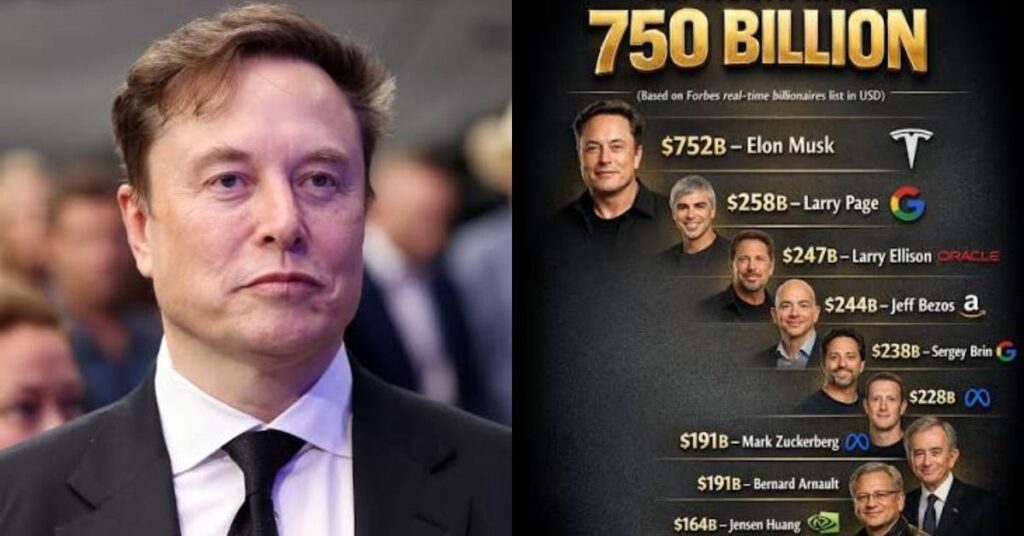
How does Elon Musk’s wealth compare to Jeff Bezos and Larry Page?
While tech leaders like Larry Page, Sergey Brin, and Jeff Bezos hold fortunes focused primarily on single public internet conglomerates (Alphabet, Amazon), Musk’s capital is diversified across aerospace, electric transport, AI, and brain-computer interfaces, giving him a significantly higher total net worth.